Aesthetic Gynecology Protocols That Scale: The Spark
The Methodological Gap in Regenerative Intimate Health
The Shift from Device-Centric to Diagnosis-Driven Care
Aesthetic gynecology protocols often fail when they are built around specific devices rather than a comprehensive diagnosis. This represents a significant clinical challenge in the field. Many practitioners enter the space with technical competence but lack a structured framework for tissue assessment, structural mapping, and regenerative sequencing. Without this decision architecture, treatments become variable, difficult to reproduce, and challenging to scale within a professional medical practice.
For clinicians aiming to operate at the level of a true specialty service, protocol design is not merely an administrative detail; it is the core clinical product. A well-defined protocol determines if a treatment is reactive or systematic, and whether the final outcomes are purely cosmetic or truly restorative. It allows a practice to deliver a coherent standard of care rather than isolated, disconnected procedures.
The Biological Foundation: Moving Beyond the Surface
In the 3D Rejuvenation Code, we recognize that the field is moving away from single-modality thinking and toward integrated restoration models. Intimate tissues are dynamic, hormonally influenced, structurally interdependent, and often affected by age, childbirth, surgery, and systemic changes at the same time. A modern protocol should reflect that complexity without becoming chaotic.
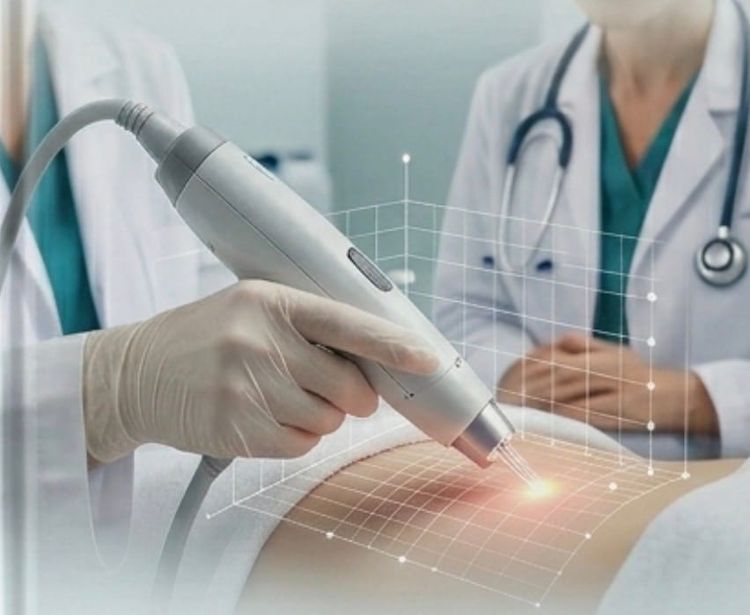
The first phase of this restoration is "The Spark". The Spark is defined by mechanical energy-based signaling. Whether utilizing laser technology, radiofrequency, or advanced micro-needling, the goal is to create a controlled "bio-insult" that forces cellular pathways to reset. This is the necessary ignition for the Clinical ECM Activation System (C-ECM-AS).
What Aesthetic Gynecology Protocols Are Meant to Solve
In aesthetic medicine, variability often hides behind good marketing. In aesthetic gynecology, that variability carries greater consequences because patient concerns are rarely one-dimensional. A patient may present with volume loss, tissue laxity, vulvovaginal atrophy, contour asymmetry, postpartum structural change, dyspareunia, altered sensation, or a combination of these findings. Treating one complaint in isolation may create a visible intervention without delivering meaningful restoration.
Well-designed aesthetic gynecology protocols solve for this complexity by creating order. They establish how the clinician evaluates tissue quality, support architecture, regenerative capacity, symptom profile, and aesthetic concern before selecting a modality. They define treatment sequencing rather than treatment selection alone. They also standardize documentation, consent logic, follow-up intervals, and criteria for escalation or combination therapy.
Technique vs. Decision Architecture
A technique is a procedural action; a protocol is a decision architecture. This distinction matters because aesthetic gynecology is often taught as a collection of isolated skills: energy-based treatment, biostimulation, filler placement, or external contour correction. Each technique may be valid, but none of them, by itself, creates clinical coherence.
A true protocol defines indication, exclusion, tissue classification, procedural order, dosing logic, treatment intervals, maintenance strategy, and outcome measurement. It recognizes that not every patient needs the same path. Standardization does not mean rigid sameness; it means reproducible reasoning.
The Spark: The Trinity of Regeneration
Within the 3D Rejuvenation Code, The Spark acts as the catalyst for the entire restoration sequence. To transition from a "fill-and-freeze" mentality to true biocellular architecture, the practitioner must master the intersection of energy, information, and structure.
- The Spark (Mechanical Energy): This represents the ignition phase where mechanical energy-based activation triggers cellular signaling.
- The Brain (Biological Intelligence): This is the chemical reprogramming of the Extracellular Matrix (ECM).
- The Bone (Structural Scaffolding): This involves creating a bio-physiological niche for long-term restoration.
The Protocol Framework: Structural Assessment First
The starting point for The Spark is not the procedure room; it is anatomical interpretation. External and internal tissues should be assessed for volume integrity, fascial support, skin quality, mucosal condition, elasticity, symmetry, scar patterning, and evidence of mechanical strain. Postpartum changes, menopausal changes, prior surgery, and hormonal context all influence planning.
Without structural assessment, clinicians tend to over-treat surface findings. Laxity may be treated as a skin problem when it is partly a support problem. This is where the 80% Rule becomes vital—by initiating a powerful "Spark," you ensure that the body’s natural regenerative capacity does the majority of the heavy lifting, preventing the "over-stuffed" appearance common in legacy trends.
Sequencing and The Triple Fast-Track Protocol
The order of treatment affects results. In the Triple Fast-Track Protocol, The Spark serves as the initial phase designed for immediate cellular response. In some cases, tissue preparation (The Spark) should precede structural augmentation. Sequencing should reflect tissue condition, indication severity, and realistic recovery expectations.
By opening the biological "gateways" of the tissue, The Spark prepares the substrate for subsequent restoration layers—The Brain and The Bone. This temporal design is what elevates a procedural checklist into a clinical manifesto.
The Power of Reproducibility
Standardized aesthetic gynecology protocols create a controlled clinical language across a practice. They allow providers to classify presentations similarly and recommend treatment with greater consistency. This reproducibility has operational value, improving consent quality, patient education, and retreatment planning.
For a protocol to be clinically meaningful, another qualified practitioner should be able to repeat the treatment rationale and execute the plan within defined parameters. If the endpoint is vague, the protocol remains weak no matter how advanced the tools appear.
Conclusion: The Future of Practice
The most credible direction for the field is a model that combines structural assessment, regenerative planning, symptom-based decision-making, and treatment sequencing into a standardized framework. Clinics that lead this category will treat protocols as intellectual infrastructure.
As a specialist, you are no longer just an injector; you are a Biological Architect. Aesthetic gynecology becomes more powerful when it is no longer organized around what you can do, but around what the tissue actually needs next. By mastering The Spark, you ignite a process that leads to functional resilience, natural symmetry, and superior patient outcomes.
For a complete guide to these protocols, consult the high-impact clinical monograph: 3D Rejuvenation Code: The Clinical Blueprint.