ECM
3D Rejuvenation Academy · Dr. Amr H. Ismail, MD, FABAM, FISQua

Advanced ECM Engineering Masterclass The Science & Beyond
From volume replacement to matrix engineering.
This masterclass is not about concealing a shadow or plumping a fold. Hyaluronic acid — correctly selected and correctly vectored — is not an inert space-occupying gel. It is a mechanical instruction delivered to a population of collapsed, senescent fibroblasts. Understand that, and your outcomes change permanently.
The Conceptual Pivot
The face is not a deflated balloon.
It is a suspension bridge.
The volumetric model
Volume loss as the disease
The aging face imagined as a balloon that has deflated — and the injector as the person with the pump. Intuitive, easy to sell, and biomechanically incomplete. It treats a living, signalling matrix as inert empty space.
The matrix model
Volume loss as the symptom
The aging face is a suspension bridge whose cables have frayed. Volume loss is downstream of structural failure — not the cause of it. When the scaffold is re-tensioned, the biology answers: cells reclaim their shape, collagen production reawakens, and structure returns before volume is ever discussed.
Course Curriculum
Six modules. One hour.
Each module builds on the last — a complete arc from the pathology of the aging matrix to the regenerative horizon.
The Biology of Matrix Decay
Molecular Mechanics & Biomaterial Selection
Mechanotransduction & Cellular Reactivation
Clinical Injection Vectoring & Protocols
Beyond the Matrix — Safety, Longevity & Future Horizons
Advanced Aesthetic Clinical Pearls
Translating ECM science into elegant treatment planning, safer delivery, and more natural full-face outcomes.
Full module outlines, the complete science and every clinical protocol are reserved for the course material itself.
What You Can Expect
A working command of the matrix — in a single sitting
The opening modules ground you in how the dermal scaffold actually fails with age. The heart of the course decodes the biomaterial in your hand — why the same molecule can soothe tissue or provoke it, and why chemistry quietly decides biology. The closing modules carry that science to the bedside: how to plan, place and review treatment as an act of engineering rather than replenishment.
Delivered in plain clinical language · Anchored throughout in the published literature
The Deliverables
Four competencies, built module by module
By the end of this session you should be able to do four things you may not be able to do reliably today.
- iExplain the mechanism — to a colleague or a skeptical patient, how a gel instructs a cell to build collagen, in language that commands scientific respect.
- iiRead a rheology datasheet — and predict how a product will behave in tissue, rather than merely reading numbers off a chart.
- iiiPlan sessions as vector maps — with defined load-bearing anchors and defined re-tensioning zones, instead of a list of syringes per region.
- ivJudge every product by its biological fate — why one implant is quietly integrated while another is slowly walled off — and choose accordingly, in front of any patient.
Faculty & Format
An educational masterclass — not a promotional one
No equity position dictates the products discussed. Every rheological range quoted is drawn from published, independently measured datasets — not manufacturer marketing material.
Anchored in Primary Literature
Built on Fisher & Quan's Michigan work on dermal matrix collapse, Landau & Fagien's mechanotransduction synthesis, and the rheology characterisation studies of Kablik, Edsman and Sundaram — 22 indexed sources in total.
Written for the Advanced Injector
You already know where the facial artery runs and you respect the deep pyriform space. What this course closes is the framework gap: why two gels that feel similar in the hand behave completely differently in the reticular dermis — biologically, not just physically.
Frameworks, Not Edicts
Every protocol shown is a framework to be adapted to your own regulatory environment, your device instructions for use, and the individual patient in front of you. Judgment is the syllabus.
 AI
AI
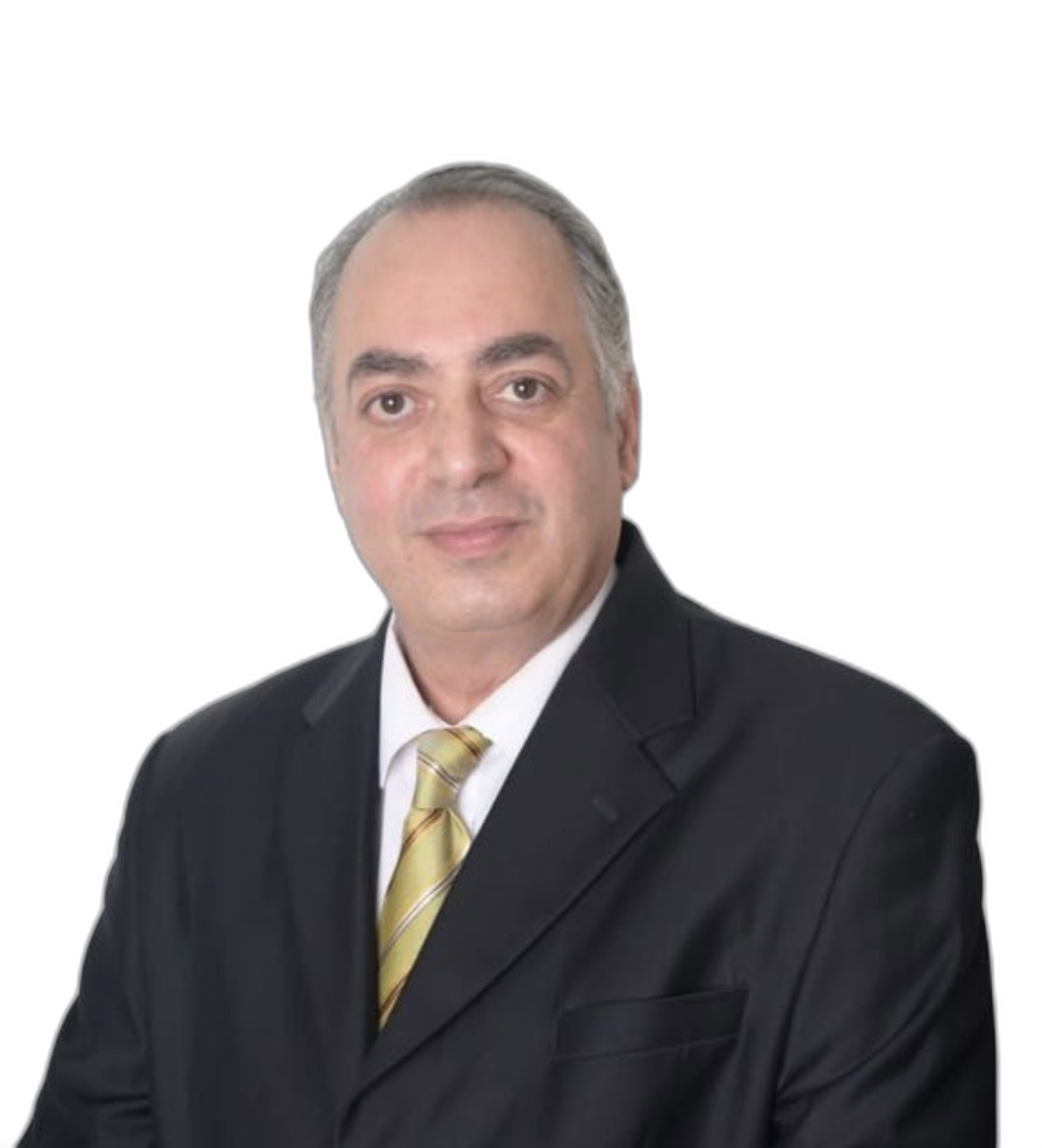
Dr. Amr H. Ismail, MD, FABAM, FISQua
Founder · 3D Rejuvenation Academy
Author · 3D Rejuvenation Code
Creator of the IHHI™ clinical standard and the ExoLase™ protocol, Dr. Ismail teaches exclusively from independent, peer-reviewed evidence. In this masterclass he reframes the syringe itself — not as volume to deposit, but as a mechanical instruction delivered to a specific population of cells, in a specific plane, at a specific tension.
Selected Peer-Reviewed References
Defend every decision with a citation, not an opinion
Built on 22 peer-reviewed, PubMed-indexed sources — from landmark matrix-biology research to independently measured filler rheology. The full reference list ships inside the course material.
Questions
Before you enroll
Who is this masterclass designed for?
What exactly do I receive?
Is the content tied to any brand or device?
How does it relate to the Academy curriculum?
Two specialist masterclasses — one diagnostic framework
Both are built for the advanced practitioner and taught from independent, peer-reviewed evidence. They treat different tissue — choose by the patients in your chair (many clinicians take both).
Hair Restoration Advanced Protocols
The Ismail Hair Health Index (IHHI™) — measure follicular health 0–100, decode WNT signalling, deploy Thulium 1927nm, and sequence multi-modal hair restoration.
- IHHI™ 0–100 scoring · four biological dimensions · A–D tiers
- WNT pathway signalling & follicular cycle biology
- Thulium 1927nm activation + PRP · PDRN · exosome sequencing
- Manufacturer-independent · CanMEDS-aligned clinical reasoning
- 2-hour masterclass · 4 lessons · lifetime access · certificate
Advanced ECM Engineering
From volume replacement to matrix engineering — rheology, mechanotransduction, biomaterial selection and vector mapping for the advanced injector.
- Read a rheology datasheet & predict in-tissue behaviour
- Mechanotransduction: how tension instructs fibroblasts
- Plan sessions as vector maps with load-bearing anchors
- 6 modules · one focused hour · 22 PubMed-indexed references
Unsure which? Start with the foundational 11-volume curriculum — or take both specialist masterclasses for the complete Spark · Brain · Bone system.
Now Enrolling
Not volume to deposit.
An instruction to deliver.
The next time you hold a syringe, see it for what the evidence says it is: a mechanical instruction delivered to a specific population of cells, in a specific plane, at a specific tension. That shift in framing is the whole of ECM engineering.